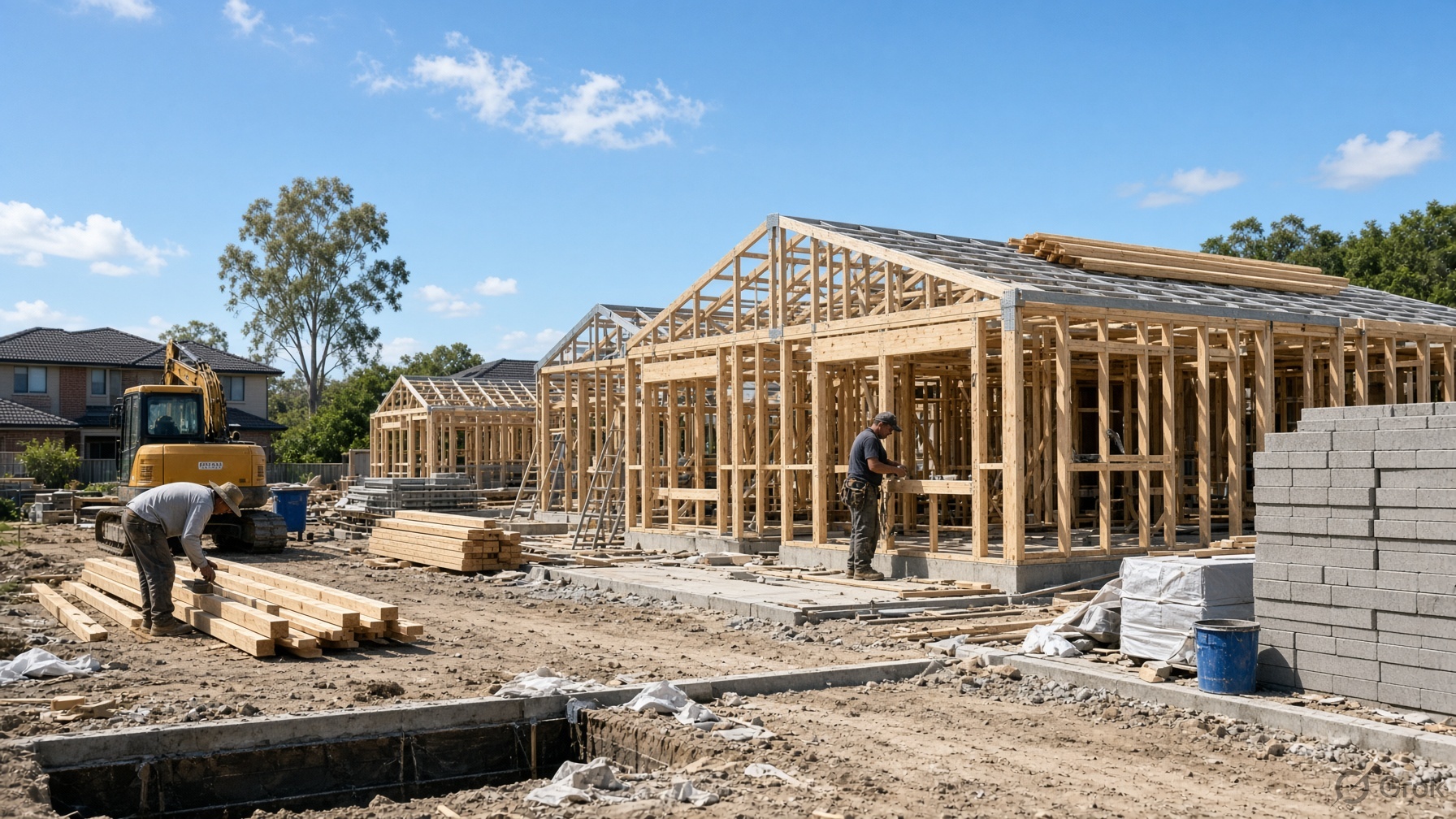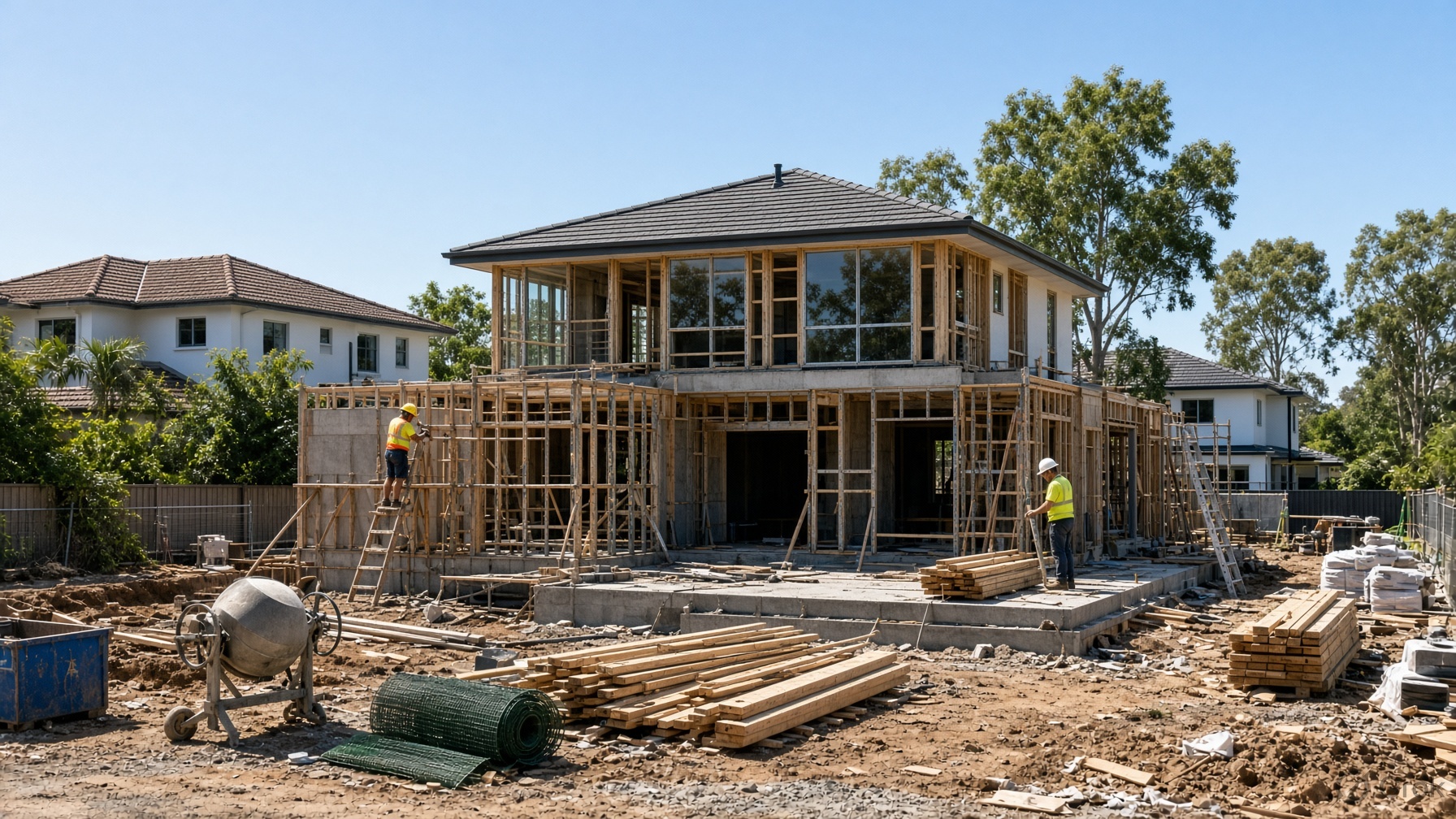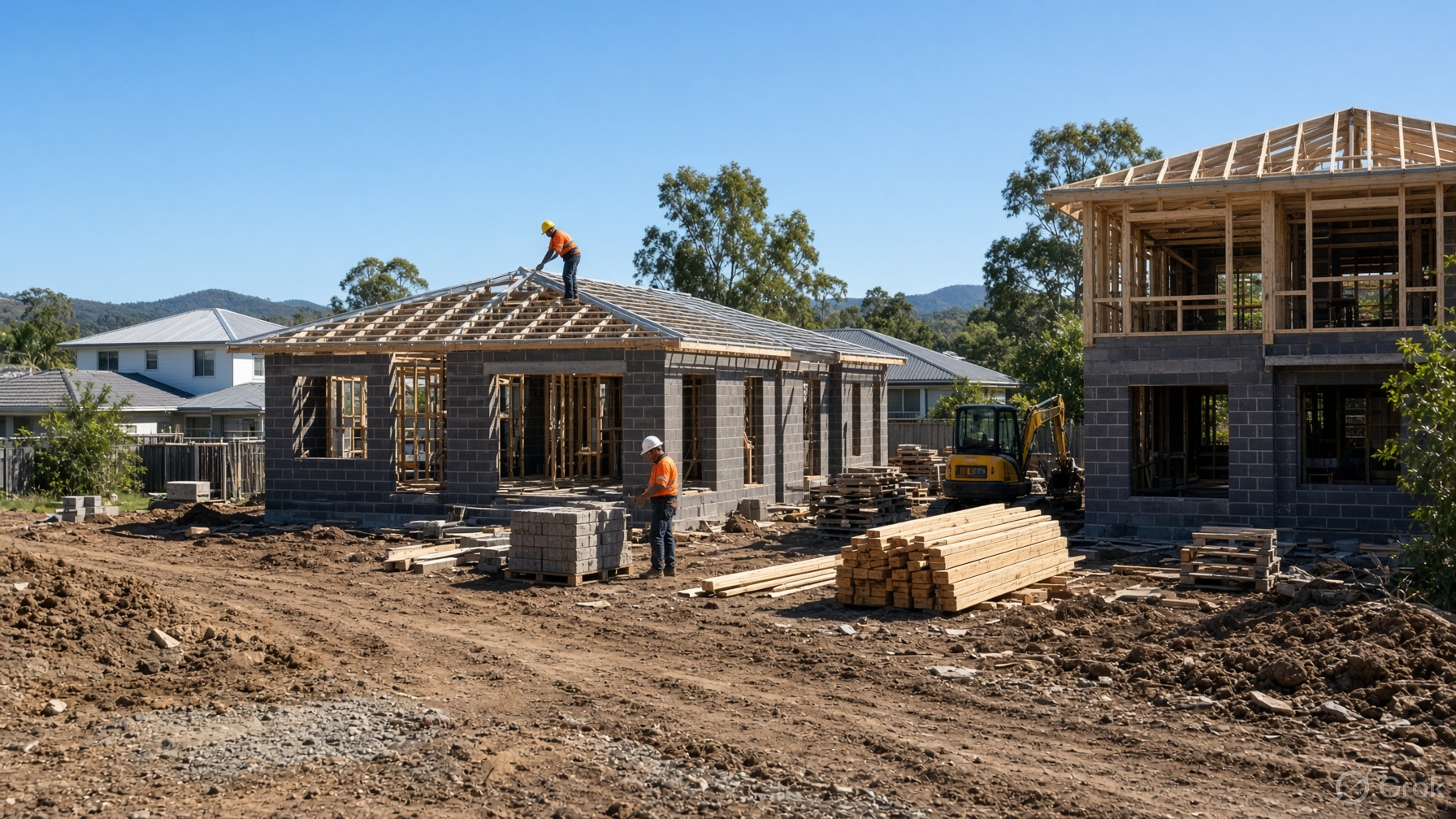

Materials are easy to see on a construction site. Labour is sometimes less visible in a budget.
Yet construction labour costs in Queensland influence almost every stage of a building project—from estimating and supervision through demolition, carpentry, electrical work, plumbing, lining, finishing and final commissioning.
South-East Queensland is also competing for workers across residential construction, commercial buildings, schools, hospitals and major infrastructure projects.
That competition has consequences for price, scheduling and project certainty.
ABS reported construction wages rising 3.3% over the 12 months to June 2026.
Queensland’s broader Wage Price Index rose 3.4% over the same period.
Wages alone do not tell the whole story, though.
A builder’s real labour cost includes much more than an employee’s hourly rate.
It can include:
That means even relatively modest wage movements can translate into meaningful project cost changes.
The labour market has eased from its tightest point, but shortages have not disappeared.
Jobs and Skills Australia’s 2025 Occupation Shortage List found that nearly half of trade roles remained in shortage, with construction specifically identified among the sectors still struggling to find sufficient qualified applicants.
ABS has separately identified shortages of bricklayers, carpenters and concreters as ongoing contributors to construction price pressure.
Carpenters and joiners are also the largest employing occupation within Australia’s construction industry, followed by electricians, construction managers and plumbers.
For an SEQ building project, reliable access to these workers can therefore become a competitive advantage.
When good subcontractors have full order books, builders compete for capacity.
Price becomes one part of that competition.
Reliable contractors also tend to prioritise builders who:
Long-standing subcontractor relationships can therefore have real value to the client.
A poorly planned programme may eventually require additional crews, weekend work or overtime to recover lost time.
The labour cost of accelerating a project can be considerably higher than completing the same work according to a realistic original programme.
Imagine an electrician is booked for a particular week but cannot complete the work because another trade is behind schedule.
The electrician leaves the project and returns two weeks later.
That creates:
Multiply that across several trades and small coordination problems can become significant cost issues.
Construction works in sequence.
Framing must reach the right stage before linings.
Rough-in needs to happen before walls close.
Ceilings rely on coordination between services.
Finishes often cannot proceed until wet trades are complete.
One unavailable subcontractor can therefore affect several contractors that follow.
This is why builders need to consider resource availability when developing the programme, rather than creating dates that look attractive but cannot be supported by the labour market.
South-East Queensland’s workforce does not operate in separate commercial, residential and government silos.
A carpenter who could work on an office refurbishment may also be needed on a school, hospital, apartment building or infrastructure project.
ABS reported that public sector non-residential activity continued to create competition for labour and resources during 2026, while Tier 1 projects were competing particularly strongly for skilled trades and project managers.
That matters for smaller projects too.
The biggest construction project in Brisbane does not need to be next door to influence the rate or availability of your subcontractor.
Reducing labour rates can look like an obvious savings strategy.
But productivity and workmanship matter just as much.
Consider two carpentry teams.
Team A costs 10% less per hour but takes 25% longer.
Team B has a higher hourly rate but completes the task efficiently and accurately.
The cheaper hourly rate produces the more expensive installed result.
This is why professional builders assess output, reliability and quality, not only the hourly charge.
Every construction task should ideally be completed once.
When poor workmanship requires rectification, the project effectively pays several times:
Business Queensland notes that contractors have obligations relating to building quality and compliance and may be required to rectify non-compliant work.
Investing in experienced trades and supervision is therefore a cost-control strategy.
Unresolved design forces trades to price uncertainty.
Detailed documentation lets subcontractors understand exactly what they need to deliver.
That generally creates better pricing and fewer variations.
Urgent projects reduce procurement options.
A builder who has six weeks to secure subcontractors has more flexibility than one who needs trades tomorrow.
Late selections can stop work.
If flooring, joinery, lighting or fixtures remain undecided, affected trades may be unable to complete their work.
There are legitimate reasons for accelerating construction.
But compressing every project simply because a shorter programme looks attractive can increase labour costs.
Commercial, education and retail projects may need after-hours or staged construction.
Those constraints should be identified before quoting because they materially affect labour productivity.
For many Qline clients, shutting down operations is not possible.
Retailers need to trade.
Schools may remain occupied.
Offices need staff access.
Healthcare and government facilities can have operational requirements around the clock.
Working around those conditions can mean:
A contractor quoting these conditions properly may appear more expensive than one assuming unrestricted daytime access.
But the comparison is not like-for-like.
Clients sometimes see supervision or project management as an unnecessary layer over the trades.
In reality, supervision is what helps those trades work efficiently together.
The site manager or project manager coordinates:
Removing adequate supervision can save money on paper while increasing the risk of errors, delays and disputes.
Ask prospective contractors:
There should be a clear point of responsibility.
Strong trade relationships improve resource certainty.
Experience improves productivity and planning.
Operational conditions can materially affect labour.
A realistic 14-week programme may be better than an unsupported 10-week promise.
A skilled carpenter who solves a difficult detail quickly can save hours of rework.
An experienced site manager who identifies a clash before installation can save thousands of dollars.
A reliable subcontractor who arrives when scheduled helps every following trade.
The goal is therefore not the lowest possible labour rate.
It is the lowest efficient cost of delivering the required result correctly.
That distinction is important when evaluating construction quotes throughout Brisbane, the Gold Coast and wider South-East Queensland.
Yes. ABS recorded construction wages increasing 3.3% over the 12 months to June 2026.
Skills shortages have eased in some areas, but Jobs and Skills Australia reported that almost half of trade roles remained in shortage in its 2025 assessment.
ABS has specifically mentioned skilled shortages affecting bricklayers, carpenters and concreters, while electrical trades are also influenced by strong construction demand.
It can involve overtime or shift rates, lower productivity, repeated mobilisation, security and restrictions on when noisy or disruptive tasks can occur.
Yes. Better drawings, realistic programming, timely client decisions and early subcontractor procurement can all improve efficiency.
Not necessarily. Productivity, workmanship, reliability and the amount of supervision or rework required all influence the final installed cost.
Internal Links Use “commercial construction projects across Queensland” for Qline Commercial Construction. Commercial Construction
Use “government and institutional construction” where discussing occupied facilities and programme constraints. Government & Institutional Projects
Use “Qline’s approach to health, safety and compliance” within the supervision section. Health & Safety
Use “completed commercial and government projects” for proof of experience. Project Showcase
Image Alt Text
Schema Markup
{ “@context”: “https://schema.org”, “@type”: “Article”, “headline”: “Construction Labour Costs in Queensland: What SEQ Clients Need to Know”, “description”: “Learn how construction wages, skilled trade shortages and project planning affect labour “author”: { “@type”: “Organization”, “name”: “Qline Industries” }, “publisher”: { “@type”: “Organization”, “name”: “Qline Industries” }, “dateModified”: “2026-09-15”, “mainEntityOfPage”: “https://qline.com.au/insights/construction-labour-costs-queensland/” }
Planning a commercial build, refurbishment or fit-out in South-East Queensland? Send Qline your drawings or project brief and our team can help you understand the scope, budget and construction considerations before work begins.

"*" indicates required fields