
Specialist Disability Accommodation (SDA) is housing designed for NDIS participants with extreme functional impairment or very high support needs. These dwellings include accessible features that help residents live more independently and allow other supports to be delivered more safely and effectively. Supported Independent Living (SIL), by contrast, is a support arrangement that helps people with daily tasks in the home. SIL is not a building type, but many homes where SIL supports are delivered still need thoughtful building design, accessibility upgrades and durable construction outcomes.
For builders and modification providers, that distinction matters. The role is not to provide SDA or SIL supports, but to deliver building works that improve accessibility, durability, safety and day-to-day functionality in the dwelling itself. At Qline Industries, we provide modification, refurbishment and accessibility upgrade works for SDA dwellings and other shared disability housing environments across Queensland.
SDA refers to the physical housing. It is a category of specialist housing funded for eligible NDIS participants who need a home with accessible design features. SIL refers to assistance or supervision with daily tasks such as personal care, meal preparation and household routines for people who need significant support at home. These supports may be delivered in an SDA dwelling, a shared home or another housing arrangement.
This means property works should be described carefully. A construction provider may complete accessibility upgrades, refurbishments or wet area works in an SDA dwelling, or in a shared home where SIL supports are provided, without suggesting that the provider is delivering SIL itself. That distinction is especially important because home modifications, SDA and SIL sit in different parts of the NDIS framework.
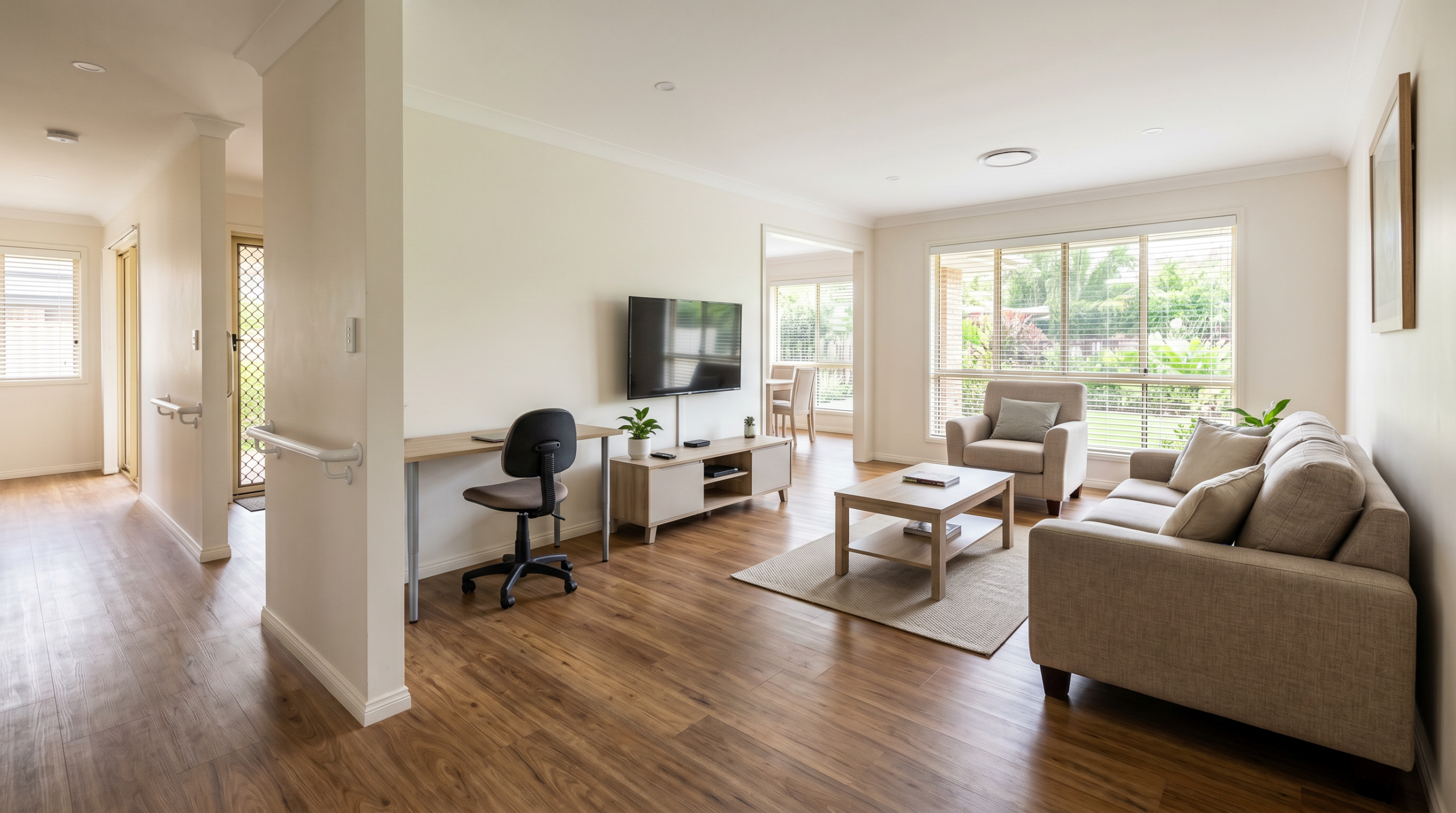
SDA dwellings are expected to perform at a higher level than a standard home. The design must support safe movement, effective care delivery, access to supports and long-term resident use. In many homes, there is heavier daily wear, more circulation by support workers, increased use of mobility equipment and greater pressure on bathrooms, kitchens, entries and shared spaces. SDA housing is designed to help residents live more independently while improving access to supports in the home.
A standard residential renovation mindset is often not enough. Disability housing works need to consider movement paths, turning space, assistive equipment, support-worker access, ease of maintenance and the ability of the property to function well over time. That is why specialist planning and experienced construction delivery matter.
Clear movement through the home is one of the most important design outcomes in disability housing. Depending on the dwelling and the needs of residents, building works may include:
These changes can improve usability for residents while also supporting safer movement for staff, carers and visitors.
Bathrooms are often one of the most demanding spaces in any disability housing environment. They need to support safe personal care, reliable waterproofing, durable finishes and layouts that work for both residents and support workers.
Typical works may include:
Home modification guidance makes clear that bathrooms are a core area where structural, layout and fitting changes may be needed to improve access and safe use.
Shared kitchens and common areas need to balance independence, supervision and practical daily use. Building works may include:
In some homes, these works also help reduce congestion in shared spaces and improve the overall functionality of the dwelling.
Private spaces should support comfort, independence and future flexibility. Depending on the needs of the resident and the dwelling type, works may include:
These works can help the home remain usable as support needs change over time.
One of the most important considerations in SDA dwellings and shared disability housing is durability. Materials and fixtures need to perform well under frequent use and be practical to maintain.
This may include:
Choosing the right materials can reduce maintenance disruption, improve the life of the dwelling and help providers avoid unnecessary rectification costs. The SDA framework places strong emphasis on design quality, long-term performance and practical functionality.
For SDA dwellings, compliance involves more than standard building practice. The SDA Design Standard sets detailed requirements for prospective SDA dwellings and includes 4 design categories: improved liveability, robust, fully accessible and high physical support. It applies to new and new build refurbished SDA from 1 July 2021.
Building works also need to align with the National Construction Code, relevant Australian Standards, Queensland building and plumbing requirements, and any certifications or approvals that apply to the project. For newly built SDA dwellings seeking enrolment, certification from an accredited third-party SDA assessor is required, although certification alone does not guarantee enrolment.
This is why it is important to avoid broad claims that any accessible renovation automatically qualifies as SDA. Some existing homes may be improved for accessibility or shared disability housing use, but SDA enrolment depends on the applicable SDA rules, design requirements and certification pathway.
Many accessibility and refurbishment works are completed while residents continue living in the home. In these situations, careful staging, clear communication and respectful site conduct are essential.
A practical approach usually includes:
This matters in any occupied property, but especially in homes where residents rely on support workers and consistent routines.
Successful disability housing projects are collaborative. Depending on the site and the scope of work, builders may work alongside:
This helps ensure the building scope reflects the needs of the residents, the practical realities of daily support and the long-term performance goals of the property. For home modifications more broadly, the NDIA expects building works to be guided by appropriate assessment and planning.
Disability housing works require more than standard construction knowledge. They demand careful planning, attention to compliance, durable workmanship and an understanding of how the property is used every day.
Qline Industries provides:
Our focus is on delivering building outcomes that support safer access, practical use and long-term reliability for residents, providers and housing operators.
The most effective disability housing projects are planned with the future in mind. That means thinking beyond the immediate build and considering how the home will perform over time.
Good planning may involve:
Early planning and experienced delivery can make a significant difference to how well a disability housing environment performs in the years ahead.
Contact us to see how we can help you.
SDA is the housing itself. SIL is support with daily tasks in the home, such as personal care and meal preparation. They are different parts of the NDIS system and should not be treated as the same thing.
In some cases, yes. Existing homes can be upgraded for accessibility or improved functionality, but not every modified dwelling will qualify as SDA. SDA enrolment depends on the relevant design, certification and regulatory requirements.
Yes. The SDA Design Standard sets specific requirements for prospective SDA dwellings, including different design categories based on resident needs.
No. Accessibility and refurbishment works may also be appropriate in other shared disability housing environments, including homes where SIL supports are delivered. SIL itself is a support model, not a dwelling standard.
Qline primarily services South-East Queensland and surrounding regions. Please contact our team to confirm service availability for your location.

"*" indicates required fields