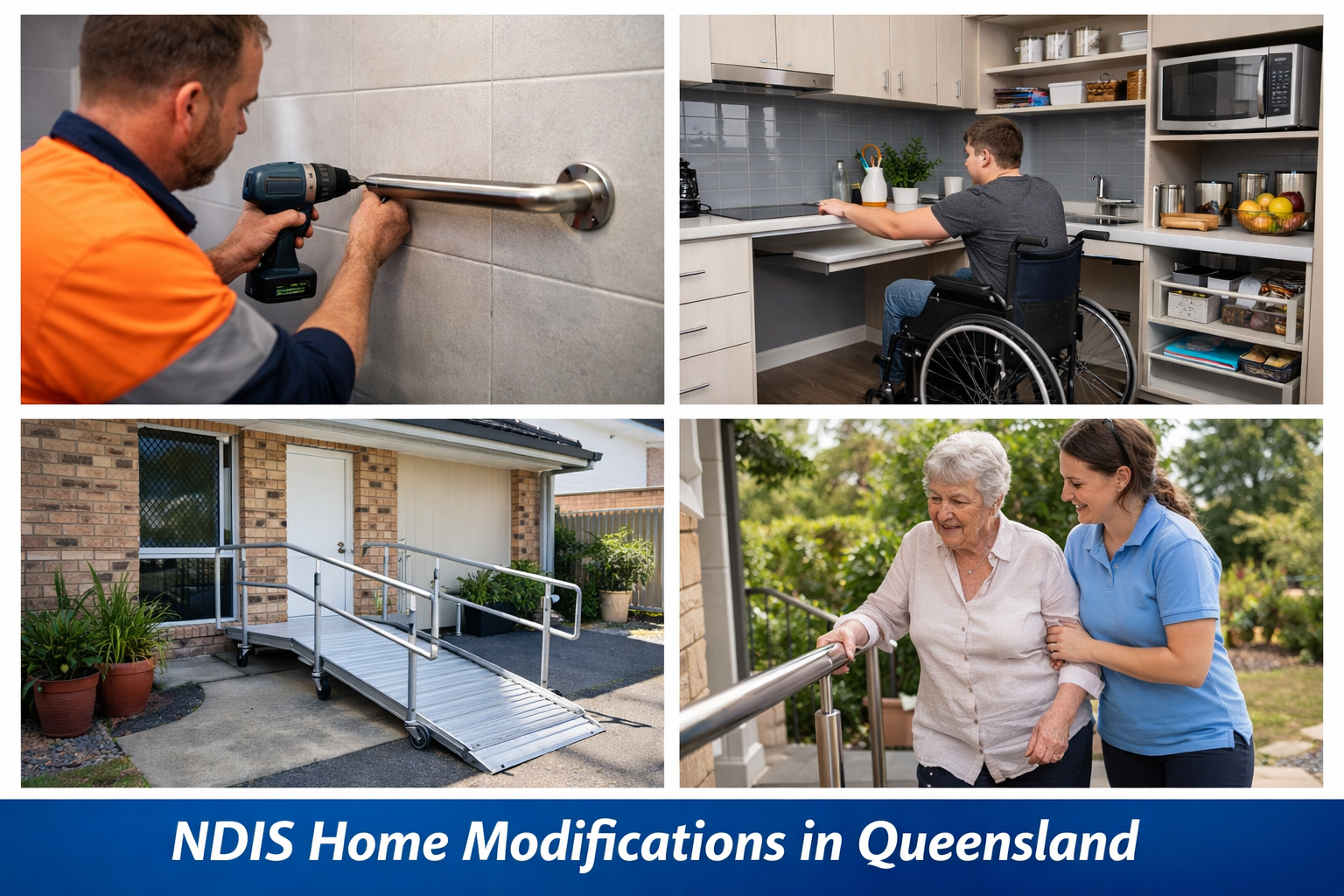

For people living with disability, the home environment plays a critical role in everyday independence, safety, and quality of life. Simple tasks many take for granted — showering, preparing meals, moving between rooms — can become challenging or unsafe without the right supports in place.
Through the National Disability Insurance Scheme, eligible participants can access funding for home modifications that remove physical barriers and support long-term independence. When delivered correctly, these modifications don’t just meet compliance requirements — they genuinely improve how a home functions for the person living in it.
At Qline Industries, we deliver NDIS home modifications in Queensland that are practical, compliant, and tailored to real-world needs. With over 20 years of building and renovation experience, we work closely with participants, families, occupational therapists, and support coordinators to create safer homes that support confident, independent living.
NDIS home modifications are physical changes made to a participant’s home to reduce risk, improve accessibility, and support daily activities. These modifications must be considered reasonable and necessary and are typically supported by an occupational therapist (OT) assessment.
Home modifications may be required to:
Modifications can range from minor adjustments to complex structural renovations, depending on the participant’s needs and functional capacity.
Safe access into and out of the home is one of the most common modification needs.
Typical access upgrades include:
These modifications reduce fall risks and allow participants to enter and exit their homes safely and independently.
Bathrooms are one of the highest-risk areas in any home, particularly for people with limited mobility.
Common NDIS bathroom modifications include:
When designed properly, an accessible bathroom can significantly reduce injury risk while improving privacy and dignity.
Kitchen modifications focus on enabling safe meal preparation and daily tasks.
These may include:
Each kitchen modification is tailored to the participant’s reach, strength, and mobility requirements.
Improving movement within the home often involves:
These changes support smoother, safer movement between rooms.
Understanding the difference between minor and complex modifications helps participants and families navigate approvals and timelines more confidently.
Minor modifications are generally low-risk, non-structural changes such as:
These modifications often require less documentation and can be approved and completed relatively quickly.
Complex modifications involve structural changes or significant alterations to the home, such as:
These typically require:
Experience is critical at this level to avoid delays, non-compliance, or costly rework.
NDIS home modifications must meet multiple layers of regulation and standards, including:
Non-compliant work can result in:
Qline ensures all works are completed by licensed trades, documented correctly, and delivered to current standards.
Successful NDIS modifications rely on strong collaboration.
We regularly work alongside:
This ensures:
We understand that home modifications can feel disruptive — particularly when participants are living in the property during works.
Our approach focuses on:
NDIS projects require more than basic construction skills. They require care, experience, and accountability.
Qline offers:
The first step is understanding the participant’s needs and funding pathway. From there, we assist with:
Q1: Do all NDIS home modifications require an OT report?
Most do, particularly complex modifications. Minor works may vary depending on funding type.
Q2: Can NDIS modifications be completed in rental properties?
Yes, in some cases, with landlord approval and suitable modification types.
Q3: How long do NDIS home modifications take?
Timeframes vary depending on complexity, approvals, and scope.
Q4: Are modifications inspected for compliance?
Yes — compliance and quality are critical to funding and safety.
Q5: What areas of Queensland do you service?
Qline primarily services South-East Queensland and surrounding regions.
Contact us today for more information.

"*" indicates required fields